
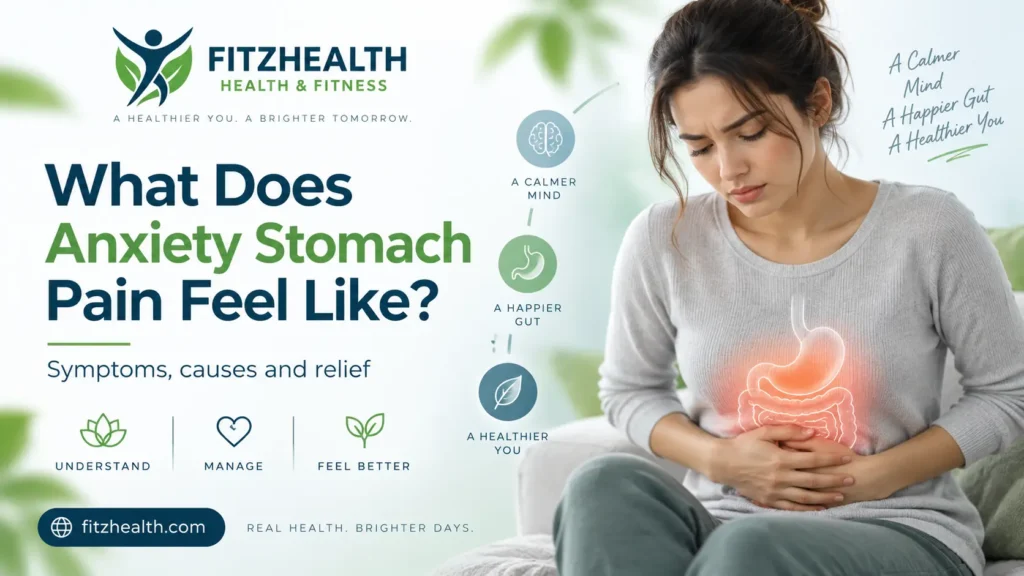
Your stomach can hear your thoughts—even when you never say them out loud.
That “knot” before an important meeting, sudden nausea when you are worried, or unexplained stomach cramps during a stressful week may not be a coincidence. Anxiety does not exist only in the mind. It can trigger very real physical changes throughout the body, and the digestive system is one of the places where those changes are often felt.
So, what does anxiety stomach pain feel like? For some people, it feels like butterflies or tightness in the stomach. For others, it causes cramping, churning, nausea, indigestion, bloating, diarrhea or a persistent dull ache. The exact sensation—and where it occurs—can vary considerably from one person to another.
Anxiety is recognized as a condition that can cause stomachaches and other digestive symptoms. The NHS lists stomach cramps, bloating, nausea, indigestion, constipation and diarrhea among the physical symptoms that may accompany anxiety, while the National Institute of Mental Health notes that stomachaches and unexplained pain can occur with generalized anxiety disorder.
However, stomach pain should not automatically be blamed on anxiety. Abdominal discomfort has many possible causes, ranging from gas and indigestion to conditions that require medical attention. Understanding the pattern can help you know when anxiety may be contributing—and when it is better to see a doctor.
What Does Anxiety Stomach Pain Feel Like?
There is no single sensation that defines anxiety stomach pain. People commonly describe it as a tight, twisting or “knotted” feeling in the abdomen. It may also feel like butterflies, churning, pressure, dull aching or intermittent cramps.
Some people experience more digestive symptoms than actual pain. You might suddenly feel nauseated, lose your appetite, become bloated or feel an urgent need to use the bathroom. Others notice indigestion, increased bowel movements, constipation or diarrhea whenever their stress levels rise.
During intense anxiety or a panic attack, the stomach may feel especially unsettled. The NHS describes a “churning stomach” and nausea among symptoms that can occur during panic attacks.
A useful clue is timing. Stomach pain from anxiety may become stronger before or during situations that make you nervous—for example, public speaking, travelling, exams, interviews, relationship conflicts or stressful workdays—and ease somewhat after the stressful situation passes.
That pattern can suggest an anxiety connection, but it does not prove one.
Can Anxiety Cause Stomach Pain?
Yes. Anxiety can cause or worsen digestive discomfort.
Your brain and digestive system constantly communicate through what is often called the gut-brain axis or gut-brain connection. Johns Hopkins Medicine describes this relationship as two-way communication between the gastrointestinal system and the central nervous system. Harvard Health similarly notes that emotions such as anxiety, anger and sadness can trigger symptoms in the gastrointestinal tract.
When your brain senses danger or significant stress, your autonomic nervous system shifts into a heightened state of alert. This “fight-or-flight” response can change digestive activity, muscle tension and how strongly you perceive sensations inside your abdomen.
That means anxiety can affect the stomach in several ways at the same time.
Digestion may speed up in some people, contributing to loose stools or an urgent bowel movement. In others, digestive movement may slow, contributing to constipation, fullness or bloating. Anxiety may also increase awareness of normal intestinal sensations, making ordinary gas, pressure or digestive movement feel more uncomfortable than usual.
Cleveland Clinic explains that functional digestive disorders can involve altered communication between the nervous system and digestive tract, including increased sensitivity to sensations within the gastrointestinal organs. Psychological factors such as anxiety can also be associated with these disorders.
This is why saying that anxiety stomach pain is “all in your head” is inaccurate. The symptoms are physical even when psychological stress is one of the triggers.
Where Does Anxiety Stomach Pain Hurt?
People frequently search “where does anxiety stomach pain hurt?”, but anxiety does not produce pain in one specific location.
Some people notice discomfort high in the abdomen, around the stomach or just beneath the ribs. This may feel like fullness, burning, nausea or indigestion.
Others experience lower abdominal cramps, especially when anxiety is accompanied by bowel changes such as diarrhea or constipation.
The discomfort can also be diffuse, meaning it seems to move around or affects a broader area rather than one precise spot.
Location alone cannot determine whether pain comes from anxiety. The abdomen contains many organs, and pain that people casually call “stomach pain” may originate elsewhere in the digestive, urinary or reproductive systems. Cleveland Clinic emphasizes that abdominal pain can come from many different structures and that unexplained, persistent or severe symptoms deserve medical evaluation.
Anxiety Stomach Pain vs. a Digestive Problem: How Can You Tell?
This is where people should be careful.
There is no home test that can conclusively tell you, “This pain is anxiety.”
An anxiety-related pattern becomes more plausible when stomach discomfort repeatedly appears during periods of worry, nervousness or emotional stress and improves as the anxiety settles. You may also notice other anxiety symptoms at the same time, such as a racing heart, sweating, trembling, dizziness, tense muscles, rapid breathing, difficulty relaxing or persistent worrying.
Stress and anxiety can both cause digestive problems. The American Psychological Association notes that stress may produce physical symptoms including digestive troubles, while anxiety involves persistent or excessive worry that may continue even without an obvious immediate stressor.
But digestive disorders can occur independently of anxiety, and sometimes both conditions exist together.
That is why recurrent stomach pain deserves proper assessment rather than repeated self-diagnosis.
Why Does My Stomach Hurt When I’m Anxious but I’m Not Having a Panic Attack?
You do not need to experience a full panic attack for anxiety to affect your gut.
Long-term worry can keep the body’s stress systems activated at a lower level for extended periods. Someone with chronic anxiety may therefore experience frequent digestive discomfort even while appearing calm on the outside.
You might wake up with a nervous stomach, lose your appetite before work, feel nauseated during stressful conversations or develop stomach cramps in the evening after spending the entire day worrying.
Generalized anxiety disorder, for example, can involve persistent anxiety lasting months or longer, and stomachaches are among the physical symptoms described by NIMH.
In other words, your stomach does not need a panic attack to react to stress.
How Long Does Anxiety Stomach Pain Last?
There is no fixed duration.
A brief nervous stomach associated with a specific stressful event may settle when the situation passes. Symptoms connected with ongoing anxiety may recur for days, weeks or longer.
The important question is not simply how long one episode lasts but whether the pain keeps returning, is becoming stronger or is interfering with eating, sleeping, working or normal daily activities.
Persistent abdominal pain should not simply be labelled “anxiety.” Mayo Clinic recommends medical evaluation when abdominal pain lasts more than a few days or causes concern.
How to Calm Anxiety Stomach Pain
If anxiety appears to be contributing to your stomach discomfort, addressing both the nervous system and your digestive habits may help.
Try slowing your breathing and consciously relaxing tense abdominal, shoulder and jaw muscles. Gentle physical activity, regular meals, adequate hydration and sufficient sleep can also support overall stress regulation.
Pay attention to caffeine as well. Large amounts can make some people feel more anxious, particularly if they already experience palpitations, shakiness or gastrointestinal sensitivity. NIMH recommends adequate sleep, reducing excessive caffeine and challenging unhelpful thought patterns as part of managing stress and anxiety.
If anxiety is frequent or affecting everyday life, professional treatment can be more effective than repeatedly treating the stomach symptoms alone.
Cognitive behavioral therapy, or CBT, is one of the best-established treatments for anxiety disorders. NIMH describes CBT as a research-supported psychotherapy and a commonly used treatment for generalized anxiety disorder. Depending on the individual, healthcare professionals may also recommend other forms of therapy or medication.
Mindfulness, relaxation exercises and breathing techniques may also be incorporated into psychotherapy and anxiety-management approaches.
Avoid starting anxiety medication, stomach medication or supplements solely because you assume anxiety is causing the pain. The correct treatment depends on the actual cause.
When Is Stomach Pain NOT Something to Blame on Anxiety?
This may be the most important section of the article.
Anxiety is common, which makes it tempting to explain every unexplained sensation as stress. But serious health problems can also cause abdominal pain.
Seek prompt medical attention when abdominal pain is severe, rapidly worsening or associated with warning signs such as:
- persistent vomiting or vomiting blood
- blood in the stool or black, tarry stools
- significant abdominal swelling or severe tenderness
- fever
- unexplained weight loss
- jaundice or yellowing of the skin or eyes
- chest pressure or pain
- shortness of breath
- fainting, severe dizziness or confusion
- pain following an injury.
Mayo Clinic specifically recommends urgent medical attention for severe abdominal pain associated with symptoms including fever, bloody stools, persistent vomiting, weight loss, significant tenderness or abdominal swelling.
New or persistent stomach pain should also be assessed if you are pregnant or have a known digestive or other medical condition.
Frequently Asked Questions About Anxiety Stomach Pain
What does a nervous stomach feel like?
A nervous stomach may feel like butterflies, churning, nausea, tightness, cramps, bloating or an urgent need to have a bowel movement. Some people experience discomfort rather than true pain.
Can anxiety cause stomach pain every day?
Anxiety can contribute to recurring stomach symptoms, particularly when anxiety itself is persistent. However, daily abdominal pain should be evaluated by a healthcare professional rather than automatically attributed to anxiety.
Can anxiety cause sharp stomach pain?
Anxiety-related abdominal discomfort can vary in intensity and description, but sharp pain has many possible causes. Sudden, severe or localized sharp abdominal pain should not be assumed to be anxiety.
Can stress cause stomach cramps and diarrhea?
Yes. Stress and anxiety can affect gastrointestinal function, and diarrhea, stomach cramps, indigestion and nausea are recognized physical symptoms associated with anxiety.
Why does anxiety make me feel nauseous?
The brain and digestive tract communicate closely. Changes in nervous-system activity during anxiety can alter digestive function and how strongly you perceive sensations from the gut, contributing to nausea or a churning stomach.
How do I know if my stomach pain is anxiety?
Look for patterns rather than trying to diagnose yourself from one symptom. Pain that repeatedly coincides with worry and improves when you feel calmer may suggest anxiety is contributing. Persistent, unexplained or severe abdominal pain still needs medical assessment.
The Bottom Line
So, what does anxiety stomach pain feel like?
It can feel like butterflies, knots, tightness, cramping, churning, bloating, nausea, indigestion or changes in bowel habits. Some people experience it mainly in the upper abdomen; others notice lower abdominal cramps or discomfort that seems to move around.
The connection is biologically plausible because your brain and digestive system constantly communicate. Anxiety can alter digestion and increase sensitivity to sensations coming from the gut.
But anxiety should be considered one possible explanation—not the automatic explanation.
If your stomach pain keeps returning, becomes severe, develops without an obvious stress pattern or comes with concerning symptoms, speak with a healthcare professional. And if anxiety itself is becoming difficult to control, treating the anxiety may improve far more than your stomach—it may improve sleep, concentration, energy and overall quality of life too.
Your gut may react to stress, but persistent pain deserves curiosity, not assumptions.