
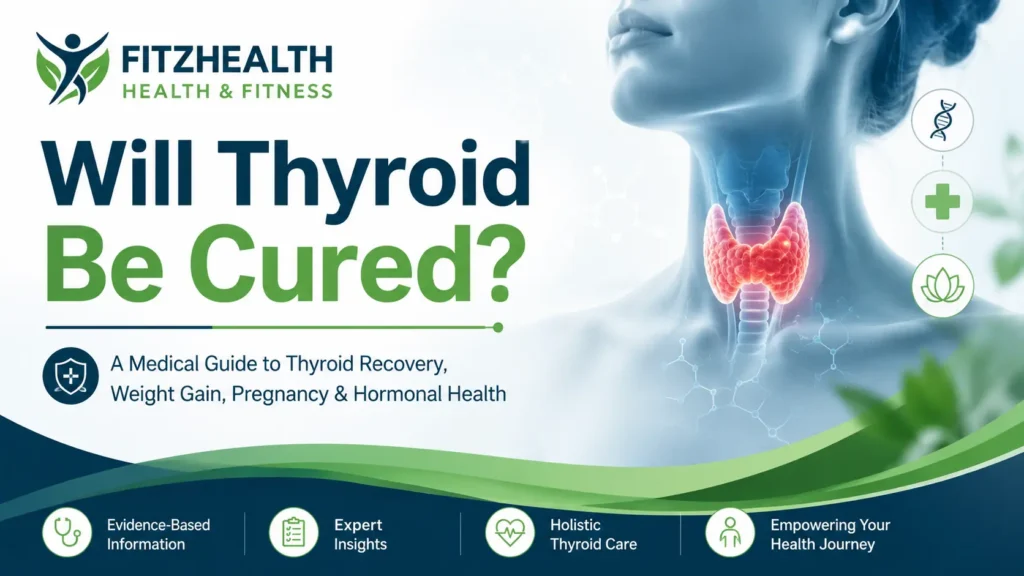
A thyroid diagnosis often begins with a blood report and ends with a much bigger question: “Will thyroid be cured?”
It is one of the first questions patients ask after seeing an abnormal TSH value, being prescribed levothyroxine, or hearing words such as hypothyroidism, Hashimoto’s disease or Graves’ disease for the first time. The internet makes the answer look deceptively simple. One website promises a permanent thyroid cure through food. Another blames gluten, stress or sleep. Someone on social media says they “reversed thyroid naturally,” while another person says they have taken thyroid medicine for 20 years.
The medical truth is more nuanced—and much more useful.
Thyroid disease is not a single condition, and therefore there is no single answer to whether thyroid disease can be cured. Some thyroid problems are temporary and thyroid function can return to normal. Some autoimmune thyroid conditions can go into remission. Other conditions permanently reduce the thyroid gland’s ability to produce hormones and are managed with long-term replacement therapy rather than “cured.” NIDDK and the American Thyroid Association describe hypothyroidism, Hashimoto’s disease, Graves’ disease, thyroiditis and other thyroid disorders as distinct conditions with different causes, treatments and long-term outcomes.
That distinction matters because successful treatment does not always mean eliminating a disease forever. In endocrinology, the better goal is often to restore normal hormone levels, prevent complications and help the person feel and function normally.
As physician Sir William Osler famously put it:
“The good physician treats the disease; the great physician treats the patient who has the disease.” — Sir William Osler
That principle fits thyroid care particularly well. We treat more than a laboratory number.
What Is the Thyroid and Where Thyroid Gland Located?
Before asking whether a thyroid problem can disappear, it helps to understand what the thyroid actually does.
For people searching “where thyroid gland located,” the thyroid is a small, butterfly-shaped endocrine gland positioned at the front of the lower neck. It produces thyroid hormones, principally thyroxine or T4 and triiodothyronine or T3. These hormones help regulate the rate at which the body uses energy and influence the heart, digestive system, body temperature, weight, mood and many other functions.
Thyroid hormone production is regulated through a feedback system involving the brain, pituitary gland and thyroid. The pituitary releases thyroid-stimulating hormone, or TSH, which acts like a signal telling the thyroid how hard it needs to work. When thyroid hormone production falls, TSH commonly rises. When excessive thyroid hormone is circulating, TSH is usually suppressed. This is why TSH is one of the most commonly used initial tests when doctors evaluate thyroid function.
This also explains why the word “thyroid” by itself is not a diagnosis. A person may have an underactive thyroid, an overactive thyroid, autoimmune thyroiditis, thyroid nodules, postpartum thyroiditis or another thyroid disorder. The prognosis depends on which of these is actually present.
So, Will Thyroid Be Cured Permanently?
The answer depends primarily on why the thyroid became abnormal.
Hypothyroidism and Hashimoto’s disease
Hypothyroidism means the thyroid is not producing enough thyroid hormone to meet the body’s needs. Hashimoto’s disease is an autoimmune condition and one of the major causes of hypothyroidism. In Hashimoto’s disease, the immune system attacks thyroid tissue, gradually reducing the gland’s hormone-producing capacity.
When enough thyroid tissue has been permanently damaged, the thyroid may no longer be capable of producing adequate hormone by itself. In this situation, treatment commonly involves levothyroxine, a synthetic form of T4 that replaces the hormone the thyroid can no longer make adequately. With correct dosing and appropriate monitoring, hypothyroidism can usually be controlled very effectively.
This is where patients sometimes become confused.
Imagine someone taking levothyroxine whose TSH returns to normal and whose fatigue, constipation and cold intolerance improve. They may understandably think, “My thyroid is cured. Can I stop the tablet?”
Not necessarily.
The blood test may be normal because the treatment is working. Normal thyroid levels while taking replacement hormone do not automatically prove that the underlying thyroid gland has recovered.
That is why thyroid medication should not be stopped or changed simply on the basis of feeling better, weight loss, advice from social media or a single normal laboratory result.
But some thyroid problems really can be temporary
Not every abnormal thyroid result means lifelong disease.
Certain types of thyroiditis can produce a temporary phase of excessive thyroid hormone followed by a period of hypothyroidism, after which thyroid function may recover. Postpartum thyroiditis is one example. According to the American Thyroid Association, most women affected by postpartum thyroiditis eventually regain normal thyroid function, although a proportion remain permanently hypothyroid.
Pregnancy itself can also cause temporary thyroid changes. NIDDK notes that high levels of the pregnancy hormone hCG can sometimes stimulate excess thyroid hormone production early in pregnancy, with this form of hyperthyroidism often resolving later in pregnancy.
So, yes—some thyroid disorders can resolve. But permanent autoimmune or structural loss of thyroid function usually requires long-term management.
What about hyperthyroidism?
Hyperthyroidism occurs when the body is exposed to more thyroid hormone than it needs. Graves’ disease is a major autoimmune cause, although thyroid nodules, thyroiditis, excessive iodine and excessive thyroid medication can also cause hyperthyroidism.
Treatment can include antithyroid medicines, radioactive iodine or thyroid surgery, depending on the underlying condition, age, pregnancy status, severity and other clinical factors.
Some patients with Graves’ disease achieve remission after a course of antithyroid medication. Others eventually receive radioactive iodine or surgery. These treatments can eliminate the overactive state, but they may result in hypothyroidism afterward—meaning thyroid hormone replacement can still be necessary.
So the medically correct question is not simply, “Can thyroid be cured?”
A better question is:
“What is causing my thyroid disorder, is the thyroid tissue likely to recover, and what treatment will keep my hormone levels normal in the long term?”
That question gets you much closer to a useful answer.
Will Thyroid Cause Weight Gain?
The search phrase “will thyroid cause weight gain” is extremely common, and there is a good physiological reason for the connection.
Thyroid hormones influence metabolic rate. When thyroid hormone levels are significantly low, the body uses energy more slowly. Hypothyroidism can therefore contribute to weight gain. However, the relationship between thyroid function and body weight is often exaggerated online.
The American Thyroid Association notes that weight gain associated with hypothyroidism is generally less dramatic than many people expect, and an important portion can result from retention of salt and water rather than accumulation of body fat alone.
This is clinically important because patients sometimes attribute 15, 20 or 30 kilograms of weight gain entirely to a mildly abnormal TSH value. Thyroid dysfunction may be one contributor, but substantial weight changes often require a broader assessment.
Body weight is influenced by food intake, muscle mass, physical activity, insulin resistance, sleep, medications, menopause, PCOS/PCOD, genetics, stress and other health conditions in addition to thyroid function.
Likewise, treating hypothyroidism does not automatically produce dramatic weight loss. ATA-reviewed evidence has shown that although some people lose weight after levothyroxine treatment, substantial weight loss is not guaranteed simply by returning thyroid hormone levels to normal.
Reddit discussions repeatedly reflect this confusion, with patients asking why weight remains difficult even after beginning levothyroxine or after their thyroid levels improve. These discussions are useful for understanding what people worry about, but individual experiences should not replace medical evaluation.
The practical message is simple:
Correct an underactive thyroid because your body needs normal thyroid hormone—not because thyroid medication is a weight-loss drug.
If thyroid tests are controlled but weight remains a concern, the next step should be to investigate the whole metabolic picture.
Why Thyroid Happens in Female Patients More Often—and Why Thyroid Comes in Male Patients Too
Search behaviour shows two interesting questions: “why thyroid happens in female” and “why thyroid comes in male.”
The language may be informal, but the medical questions behind it are important.
Thyroid disease can occur in both sexes, but several thyroid disorders—particularly autoimmune thyroid diseases—are significantly more common in women.
For example, NIDDK reports that Hashimoto’s disease is approximately four to ten times more common in women than in men. Women are also substantially more likely than men to develop hypothyroidism overall.
There is no single proven explanation for this difference. Autoimmune disease develops through a complex interaction between genetic susceptibility, immune regulation, hormonal influences and environmental triggers. Women also experience major hormonal and immune shifts during reproductive life, including pregnancy and the postpartum period, when certain thyroid disorders can emerge or become more apparent.
But thyroid disease is definitely not a “female-only” condition.
Men can develop Hashimoto’s hypothyroidism, Graves’ disease, thyroid nodules, thyroiditis, iodine-related thyroid problems and other thyroid disorders. Graves’ disease, for example, can occur in both men and women, and family history plus the presence of other autoimmune disorders can increase risk.
Men with persistent fatigue, unexplained weight change, heart palpitations, tremor, heat or cold intolerance, constipation, changes in concentration or visible neck swelling should therefore not dismiss thyroid disease merely because it is more frequently discussed in women.
How Thyroid Effects Pregnancy: Fertility, Pregnancy and Baby Development
People commonly search “how thyroid effects pregnancy”; medically, the phrase is better written as “how thyroid affects pregnancy.”
This is one of the most important parts of thyroid care because pregnancy changes thyroid physiology, and thyroid hormones play an essential role during fetal development.
Untreated or inadequately treated maternal hypothyroidism can be associated with adverse pregnancy outcomes, while appropriate treatment significantly changes the picture. NIDDK explains that levothyroxine is used to replace deficient thyroid hormone during pregnancy and is important for maternal and fetal health.
ACOG similarly states that untreated thyroid disease can pose risks during pregnancy and that most pregnant women with appropriately treated thyroid disease can have healthy babies.
Women who already have hypothyroidism may require closer monitoring after becoming pregnant because thyroid hormone requirements frequently rise during pregnancy. The American Thyroid Association recommends early thyroid testing in women with established hypothyroidism once pregnancy is confirmed and ongoing monitoring as clinically appropriate.
Hyperthyroidism during pregnancy also deserves specialist management. Graves’ disease is one possible cause, but treatment decisions differ from routine nonpregnancy management because fetal safety must be considered and radioactive iodine is not used during pregnancy.
Online communities reveal how frightening this topic can become. Reddit contains recurring questions from women with hypothyroidism who worry about miscarriage, fetal development or whether pregnancy is safe at all.
The answer should not be fear.
It should be control and monitoring.
A woman with thyroid disease can absolutely have a healthy pregnancy, but pregnancy is not the time to experiment with medication, supplements or “natural thyroid cures.” Preconception planning and appropriate thyroid testing are far more valuable.
Thyroid and PCOD: Are They Connected?
PCOD, often referred to clinically as polycystic ovary syndrome or PCOS, frequently appears alongside thyroid-related searches because both conditions can involve menstrual irregularity, weight concerns, fertility problems and hair changes.
That overlap does not mean they are the same disorder.
PCOS is a complex endocrine-metabolic condition, while hypothyroidism describes inadequate thyroid hormone action. A person may have one without the other, but research suggests that thyroid abnormalities occur more frequently among women with PCOS.
A 2025 systematic review and meta-analysis indexed in PubMed estimated that roughly 20% of women with PCOS had subclinical hypothyroidism across the included studies, although prevalence varies according to population and diagnostic criteria.
This finding should not be simplified into “PCOD causes thyroid” or “thyroid causes PCOD.”
That is not what the evidence shows.
Instead, the conditions can coexist and produce overlapping symptoms. For a woman with PCOD who also develops marked fatigue, constipation, unusual cold intolerance, unexplained weight changes or other thyroid-related symptoms, a clinician may consider thyroid testing as part of the broader hormonal assessment.
The key principle is to avoid forcing every symptom into one diagnosis.
Hormonal health rarely works that neatly.
Better Sleep, Stress and Diet: Can Lifestyle Reverse Thyroid Disease?
This is where thyroid information online often drifts from helpful into misleading.
Yes, better sleep, balanced nutrition, regular physical activity and stress management are important components of overall health. Poor sleep can worsen fatigue, appetite control, concentration and quality of life. Thyroid disorders themselves can also affect sleep—hyperthyroidism may contribute to restlessness, heat intolerance and difficulty sleeping, while hypothyroidism commonly causes fatigue and sleepiness.
But better sleep does not replace thyroid hormone when the thyroid can no longer produce enough of it.
The same caution applies to diet.
The thyroid requires iodine to manufacture thyroid hormone, but taking more iodine does not automatically improve thyroid function. Excessive iodine can actually contribute to hyperthyroidism in susceptible people, and seaweed or iodine-containing supplements can provide unexpectedly large amounts.
Therefore, statements such as “cure your thyroid naturally in seven days,” “stop thyroid medicine with this diet,” or “heal Hashimoto’s only through detoxification” deserve considerable skepticism.
Wellness resources such as fitzhealth.com may be useful for general information on fitness, mindful nutrition and wellness habits, but thyroid-specific diagnosis and treatment should still be based on validated laboratory testing and qualified medical advice. FitzHealth currently presents itself primarily as a fitness and wellness information platform rather than a specialist thyroid clinical guideline source.
Lifestyle matters.
But lifestyle and medical treatment are not competitors.
Use lifestyle to support your physiology. Use medicine when physiology needs medicine.
How Thyroid Disease Is Actually Diagnosed
One of the biggest mistakes people make is trying to diagnose thyroid disease from symptoms alone.
Fatigue does not automatically mean hypothyroidism.
Hair fall does not automatically mean hypothyroidism.
Weight gain does not automatically mean hypothyroidism.
Irregular periods do not automatically mean hypothyroidism.
These symptoms can occur in thyroid disease, but they can also appear in iron deficiency, PCOD/PCOS, sleep disorders, nutritional deficiencies, depression, medication effects and many other conditions.
Doctors therefore use laboratory testing rather than symptom guessing.
Thyroid evaluation usually begins with blood tests such as TSH and thyroid hormone measurements such as free T4. Depending on the clinical situation, additional tests may include T3 and thyroid antibodies. Thyroid antibody testing can help identify autoimmune disorders such as Hashimoto’s disease or Graves’ disease. Imaging may be needed when the concern involves thyroid enlargement, nodules or structural abnormalities rather than hormone production alone.
This is why interpreting thyroid results from a screenshot without the laboratory reference range, symptoms, medications, pregnancy status and clinical context can be misleading.
A TSH result is a clue.
It is not the entire patient.
When Should You Speak to a Doctor About Thyroid Symptoms?
Medical evaluation is reasonable when symptoms are persistent, unexplained or occur together—particularly fatigue accompanied by marked weight change, constipation, heat or cold intolerance, palpitations, tremor, menstrual changes, fertility concerns or neck swelling.
Women who are pregnant, planning pregnancy or already taking levothyroxine deserve particular attention because thyroid requirements can change during pregnancy.
People already receiving thyroid treatment should also discuss new symptoms or substantial changes with their clinician rather than adjusting medication themselves.
The objective is not to chase the “perfect” TSH number from an internet forum.
The objective is to achieve appropriate biochemical control while considering symptoms, diagnosis, age, pregnancy status, medication absorption and other health factors.
Will Thyroid Be Cured? The Answer I Want Every Patient to Understand
So, will thyroid be cured?
Sometimes.
But not always—and that is not bad news.
Temporary thyroiditis can resolve. Pregnancy-related thyroid changes can normalize. Some patients with Graves’ disease enter remission. Other causes of hyperthyroidism can be treated definitively.
By contrast, Hashimoto’s disease that has significantly damaged thyroid tissue, removal of the thyroid gland or destruction of thyroid tissue through radioactive iodine may leave the body permanently unable to produce sufficient thyroid hormone. In those situations, treatment is usually replacement rather than cure.
And replacement therapy should not be viewed as failure.
If the body does not produce enough of an essential hormone and medicine safely replaces what is missing, the goal of treatment has been achieved.
The danger comes when patients become so focused on the word “cure” that they abandon proven treatment for supplements, restrictive diets or online promises that have never demonstrated that they can restore permanently damaged thyroid tissue.
Frequently Asked Questions About Thyroid Disease
Can thyroid be cured permanently?
It depends on the cause. Temporary thyroiditis may resolve, Graves’ disease can sometimes enter remission, while permanent hypothyroidism caused by Hashimoto’s damage, thyroid surgery or radioactive iodine frequently requires long-term thyroid hormone replacement.
Can thyroid levels become normal without medicine?
They can in certain temporary thyroid conditions. However, when thyroid hormone production is permanently impaired, medication may be required to maintain normal levels. A normal TSH while taking medication does not prove that medicine is no longer needed.
Is thyroid medicine lifelong?
It can be. People with permanent hypothyroidism often require long-term levothyroxine. People whose hypothyroidism resulted from a temporary form of thyroiditis may not necessarily require lifelong treatment. The decision depends on the underlying diagnosis and follow-up thyroid tests.
Will thyroid cause weight gain even after treatment?
Treating hypothyroidism corrects thyroid hormone deficiency, but weight may not automatically return to a previous level because body weight has many determinants beyond thyroid function. Thyroid-related weight gain is also often less dramatic than popularly believed.
Can I lose weight if I have hypothyroidism?
Yes. Having hypothyroidism does not make weight loss impossible. The first medical priority is ensuring that hypothyroidism is adequately treated. Nutrition, physical activity, sleep, PCOD/PCOS, medications and other metabolic factors may then need individual attention.
Can thyroid affect periods?
Yes. Thyroid disorders can influence reproductive and menstrual function. Menstrual or fertility concerns may be particularly relevant in both hypothyroidism and Graves’ disease.
Can a woman with thyroid disease have a normal pregnancy?
Yes. Most women with appropriately treated thyroid disease can have healthy pregnancies. Thyroid levels may require closer monitoring and medication adjustment before and during pregnancy.
Can PCOD and thyroid occur together?
Yes. PCOD/PCOS and thyroid dysfunction can coexist. Recent meta-analysis data suggest subclinical hypothyroidism is relatively common among women with PCOS, although the two conditions should still be diagnosed and managed separately.
Why is thyroid disease more common in females?
Autoimmune thyroid disorders are substantially more common in women. Genetics, immune-system biology and reproductive/hormonal influences are believed to contribute. Hashimoto’s disease, for example, is reported by NIDDK to occur four to ten times more often in women than men.
Can men develop thyroid problems?
Yes. Men can develop hypothyroidism, Hashimoto’s disease, Graves’ disease, thyroiditis and thyroid nodules. Lower prevalence in men does not mean immunity from thyroid disorders.
Does sleeping better cure hypothyroidism?
No. Better sleep supports general health and can improve fatigue and quality of life, but it does not replace thyroid hormone when the gland cannot produce enough. Persistent fatigue despite normal thyroid levels should prompt consideration of other possible causes rather than automatically increasing thyroid medication.
Can diet cure thyroid disease?
A balanced diet supports health, but no single food or diet has been established as a universal cure for hypothyroidism or Graves’ disease. Iodine is necessary for thyroid hormone production, but excessive iodine can also cause thyroid problems in susceptible individuals.
Should I stop levothyroxine once my TSH becomes normal?
Not on your own. A normal TSH may indicate that your prescribed dose is working. Medication changes should be based on the underlying diagnosis, repeat blood tests and clinical advice.
Final Medical Takeaway
A thyroid disorder should never be reduced to one abnormal TSH number, one symptom or one viral wellness claim.
The thyroid interacts with metabolism, body weight, cardiovascular function, reproductive health and pregnancy. It can also coexist with conditions such as PCOD/PCOS, making symptoms more complicated than they initially appear.
Some thyroid conditions recover.
Some go into remission.
Some require long-term medication.
All deserve an accurate diagnosis.
Instead of asking only “will thyroid be cured?”, ask the question that changes the quality of your treatment:
“Why is my thyroid abnormal, and what does my specific thyroid condition need?”
Because in good medicine, the goal is never merely to make a report look normal.
The goal is to help the person behind the report stay healthy.
Medical Disclaimer: This article is for general health education and does not diagnose, treat or replace consultation with a physician or endocrinologist. Do not start, stop or change thyroid medication or supplements without appropriate medical advice, particularly during pregnancy.