

A period arriving a few days earlier or later than expected is usually not a reason to panic. Menstrual cycles do not always follow a perfect 28-day schedule.
However, periods that repeatedly arrive very early, come several weeks late, disappear for months or vary significantly from one cycle to another may be described as irregular.
Irregular periods are not a medical condition by themselves. They are a change in menstrual pattern that can happen for several reasons, including pregnancy, hormonal contraception, stress, significant weight changes, polycystic ovary syndrome, thyroid disease and the transition to menopause.
Sometimes the cause is temporary and harmless. In other cases, irregular periods may be the first sign that your hormones, ovaries, thyroid gland or another part of your reproductive system needs medical attention.
What Are Irregular Periods?
The menstrual cycle is counted from the first day of one period to the first day of the next period.
A cycle may be considered irregular when:
-
- Periods repeatedly occur unusually close together
-
- There are long gaps between periods
-
- The number of days between periods changes significantly
-
- A period is missed for several months
-
- Bleeding occurs between periods
-
- Bleeding happens after sex
-
- Periods suddenly become unpredictable after previously being regular
-
- The amount or duration of bleeding changes considerably
Clinical definitions differ slightly. The American College of Obstetricians and Gynecologists describes cycles shorter than 21 days or longer than 35 days as abnormal, while the U.S. Office on Women’s Health advises speaking with a healthcare professional when cycles are regularly shorter than 24 days or longer than 38 days.
The practical message is simple: pay attention to a persistent change from your normal pattern rather than obsessing over one slightly early Tuesday.
What Is Considered a Normal Menstrual Cycle?
A menstrual cycle does not need to last exactly 28 days to be considered normal.
For many adults, cycles commonly fall within a range of approximately 24 to 38 days. The length may differ slightly from month to month. Periods may also change with age, hormonal contraception, pregnancy, breastfeeding and the approach to menopause.
The menstrual cycle is controlled by communication between the brain, pituitary gland, ovaries and uterus. Hormones help an egg develop and control ovulation and the growth of the uterine lining.
When ovulation does not happen regularly or hormone levels change, a period may arrive late, occur early or not happen at all.
Common Causes of Irregular Periods
There is no single cause of irregular menstruation. Some causes are natural life changes, while others involve hormonal, metabolic, reproductive or medical conditions.
Common causes include:
-
- Pregnancy
-
- Breastfeeding
-
- Puberty
-
- Perimenopause
-
- Polycystic ovary syndrome
-
- Thyroid disorders
-
- High prolactin levels
-
- Significant stress
-
- Rapid weight loss or weight gain
-
- Eating disorders
-
- Excessive exercise or inadequate calorie intake
-
- Hormonal birth control
-
- Certain medicines
-
- Primary ovarian insufficiency
-
- Pelvic inflammatory disease
-
- Poorly controlled diabetes
-
- Some uterine or ovarian conditions
A healthcare professional usually considers your age, pregnancy possibility, symptoms, medicines, weight changes and previous cycle pattern before recommending tests.
1. Pregnancy
Pregnancy is one of the first possibilities to consider when a period is late or missed in someone who could become pregnant.
A missed period may be an early sign of pregnancy, but pregnancy symptoms vary. Some people may also experience light spotting that they mistake for a short or unusual period.
If pregnancy is possible, taking a home pregnancy test is a reasonable first step. Pregnancy must be considered before investigating other causes of a missed period.
People with irregular cycles may find it difficult to know when to test. The U.S. Office on Women’s Health suggests testing approximately 36 days after the beginning of the last menstrual cycle or four weeks after sex when the next expected period cannot be predicted.
A negative test may need to be repeated after a few days if the period still does not arrive.
When pregnancy-related bleeding needs urgent care
Seek urgent medical help when pregnancy is possible and bleeding occurs with:
-
- Severe or one-sided abdominal pain
-
- Shoulder pain
-
- Fainting or severe dizziness
-
- Heavy bleeding
-
- Weakness or collapse
These symptoms require prompt assessment because bleeding during pregnancy can have several causes, including early pregnancy complications.
2. Polycystic Ovary Syndrome
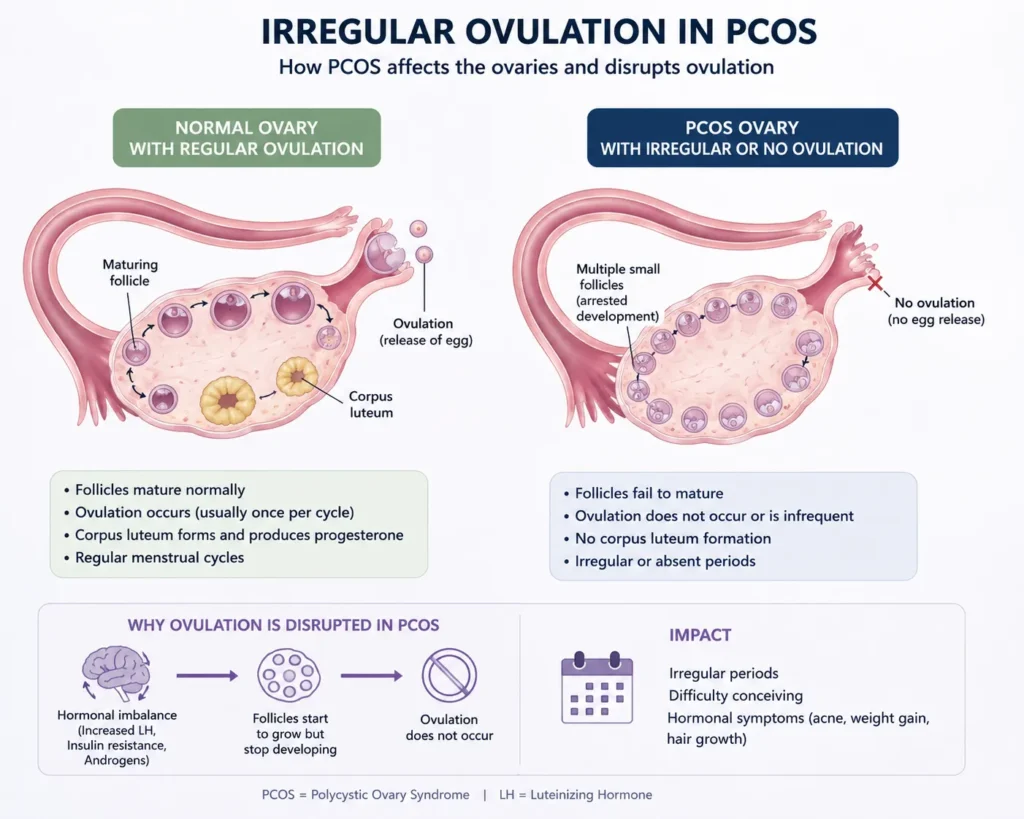
Polycystic ovary syndrome, commonly called PCOS, is one of the most important causes of irregular or missed periods.
In PCOS, hormonal and metabolic changes may interfere with regular ovulation. When an egg is not released regularly, periods may become infrequent, unpredictable or absent.
Other possible signs of PCOS include:
-
- Acne
-
- Increased facial or body hair
-
- Thinning scalp hair
-
- Weight gain or difficulty managing weight
-
- Darkened or thickened skin in body folds
Not everyone with PCOS has ovarian cysts, and irregular periods alone do not confirm the diagnosis. PCOS is assessed using a combination of menstrual history, symptoms, hormone tests and sometimes an ultrasound.
Do not assume every late period is PCOS. The internet diagnoses PCOS faster than most people finish typing “period late,” but proper evaluation still matters.
3. Thyroid Disorders
The thyroid is a small gland in the neck that produces hormones involved in metabolism and many other body functions.
Both an underactive and overactive thyroid can affect menstruation.
Hypothyroidism, or an underactive thyroid, may cause:
-
- Heavy or irregular periods
-
- Tiredness
-
- Weight gain
-
- Feeling unusually cold
-
- Dry skin
-
- Constipation
-
- Thinning hair
-
- Fertility problems
Hyperthyroidism, or an overactive thyroid, may be associated with lighter, less frequent or irregular periods. Other symptoms can include unexplained weight loss, heat intolerance, trembling, anxiety and a fast heartbeat.
A thyroid-stimulating hormone blood test is commonly included when doctors investigate absent or irregular periods.
4. Stress
Long-term emotional or physical stress can interfere with the hormonal signals involved in ovulation.
Stress does not affect everyone’s menstrual cycle in the same way. For some people, a stressful event may cause a period to arrive late. For others, prolonged stress may contribute to missed or irregular periods.
Work pressure, relationship problems, grief, anxiety, illness, sleep disruption and major life changes may all place stress on the body.
However, stress should not automatically be blamed when periods remain irregular. Persistent changes still deserve medical assessment because stress can exist alongside thyroid disease, PCOS, pregnancy or another condition. Chronic stress is recognised as a possible contributor to menstrual irregularity.
5. Sudden Weight Loss or Inadequate Calorie Intake
The body requires enough energy to support ovulation and reproductive hormone production.
Rapid weight loss, restrictive dieting, very low body fat or inadequate calorie intake can interrupt hormonal signals between the brain and ovaries. This may cause periods to become irregular or stop.
This pattern may occur in people with:
-
- An eating disorder
-
- Aggressive dieting
-
- Very low calorie intake
-
- Rapid weight loss
-
- High training volume without adequate nutrition
-
- A combination of physical and emotional stress
Functional hypothalamic amenorrhea is a condition in which the menstrual cycle stops because the brain reduces reproductive hormone signalling. Low energy availability, excessive exercise and high stress are recognised contributors.
Missing periods because of under-fuelling is not evidence that a fitness plan is “working.” It may be a sign the body does not have enough energy to maintain normal reproductive function.
6. Weight Gain and Obesity
Weight gain and obesity can also affect the menstrual cycle.
Body fat influences hormone production and metabolism. Higher levels of body fat may contribute to hormonal changes, irregular ovulation and missed, unpredictable or heavy periods.
Obesity is also commonly associated with insulin resistance and PCOS, although not everyone with obesity has PCOS and not everyone with PCOS is overweight.
Irregular periods should never be dismissed with “just lose weight.” A proper assessment is needed to identify whether PCOS, thyroid disease, medication, stress or another condition is involved.
7. Excessive Exercise
Regular physical activity is beneficial for overall health. However, intensive exercise combined with insufficient nutrition and recovery can disrupt menstruation.
This is more likely in people who:
-
- Train for long periods
-
- Perform high-intensity exercise frequently
-
- Have very low body fat
-
- Restrict calories
-
- Recently increased training volume
-
- Do not allow adequate recovery
Exercise-related menstrual disruption is usually connected to low energy availability rather than exercise being inherently harmful. The body may not receive enough energy to support training, everyday functions and normal reproductive hormone activity at the same time.
8. Hormonal Birth Control
Hormonal contraception can change the timing and amount of menstrual bleeding.
Depending on the method, periods may become:
-
- Lighter
-
- Less frequent
-
- Irregular
-
- Absent
-
- Unpredictable during the first few months
Methods that may affect bleeding include:
-
- Combined birth control pills
-
- Progestin-only pills
-
- Hormonal intrauterine devices
-
- Contraceptive injections
-
- Implants
-
- Vaginal rings
-
- Contraceptive patches
Bleeding changes can be expected with some methods, but new heavy bleeding, severe pain, pregnancy symptoms or persistent concerns should be discussed with the prescribing healthcare professional.
After stopping certain hormonal methods, periods may take time to return to their previous pattern.
9. Breastfeeding and the Postpartum Period
Periods often stop during pregnancy and may remain absent or irregular while breastfeeding.
The hormone prolactin helps produce breast milk and can suppress ovulation. Some people resume periods within a few months after delivery, while others may not have a period until breastfeeding becomes less frequent or stops.
Ovulation can return before the first postpartum period. Therefore, an absent period while breastfeeding does not guarantee that pregnancy cannot occur.
Discuss contraception with a qualified healthcare professional when avoiding another pregnancy.
10. Puberty
Irregular cycles are common during the first few years after menstruation begins because the hormonal system controlling ovulation is still maturing.
Cycles often become more predictable within approximately three years of the first period. However, very long gaps, extremely heavy bleeding, severe pain or persistent irregularity should not automatically be dismissed as “just puberty.”
A teenager should receive medical evaluation when:
-
- The first period has not started by age 15
-
- Periods have not started within three years of breast development
-
- Periods stop for approximately three months
-
- Bleeding is very heavy
-
- Severe pain interferes with school or daily activities
-
- Irregular cycles continue several years after the first period
11. Perimenopause
Perimenopause is the transition leading up to menopause. It often begins during the 40s, although timing varies.
Hormone levels may fluctuate, causing periods to:
-
- Arrive earlier or later
-
- Become lighter or heavier
-
- Last for fewer or more days
-
- Stop for a month or several months and then return
Irregular periods can be a normal feature of perimenopause. However, bleeding changes should still be discussed with a healthcare professional because other conditions can occur during the same stage of life.
Bleeding after menopause is not considered a normal period. Menopause is generally defined as 12 consecutive months without menstruation, and any bleeding after that point needs medical evaluation.
12. High Prolactin Levels
Prolactin is the hormone involved in breast milk production.
An abnormally high prolactin level outside pregnancy and breastfeeding can interfere with ovulation and cause irregular or absent periods.
Possible accompanying symptoms include:
-
- Milky breast discharge when not breastfeeding
-
- Headaches
-
- Vision changes
-
- Reduced sexual desire
-
- Difficulty becoming pregnant
Certain medicines and pituitary gland conditions can raise prolactin. A doctor may order a blood test when irregular periods occur with breast discharge or other suggestive symptoms.
13. Primary Ovarian Insufficiency
Primary ovarian insufficiency occurs when the ovaries stop working normally before age 40.
Periods may become irregular or stop, but occasional ovulation and pregnancy may still occur. It is not exactly the same as natural menopause.
Possible symptoms include:
-
- Irregular or absent periods
-
- Hot flushes
-
- Night sweats
-
- Vaginal dryness
-
- Difficulty becoming pregnant
-
- Sleep disturbance
Medical assessment is important because low estrogen levels can affect fertility, bone health and other aspects of wellbeing. Primary ovarian insufficiency is included among recognised causes of irregular and absent menstruation.
14. Certain Medicines
Some medicines can interfere with menstrual hormones or raise prolactin levels.
Possible examples include certain:
-
- Antipsychotic medicines
-
- Anti-epileptic medicines
-
- Hormonal medicines
-
- Chemotherapy treatments
-
- Steroid hormone treatments
-
- Medicines affecting the pituitary or reproductive hormone system
Do not stop prescribed medicine without medical advice. A doctor can review the timing of symptoms, dosage and possible alternatives when appropriate.
15. Pelvic and Reproductive Health Conditions
Some reproductive conditions are more likely to cause bleeding between periods, heavy bleeding or pain rather than simply delayed periods.
These include:
-
- Uterine fibroids
-
- Uterine polyps
-
- Adenomyosis
-
- Endometriosis
-
- Ovarian cysts
-
- Pelvic inflammatory disease
-
- Bleeding disorders
-
- Changes affecting the uterine lining
Bleeding after sex, between periods or after menopause should not be assumed to be an irregular menstrual cycle. It requires proper assessment to determine where the bleeding is coming from and what is causing it.
Symptoms That May Occur Alongside Irregular Periods
The symptoms occurring with menstrual changes can offer clues about the possible cause.
Tell your doctor when irregular periods are accompanied by:
-
- Acne or increased facial hair
-
- Sudden weight gain or weight loss
-
- Hair thinning
-
- Breast discharge
-
- Hot flushes or night sweats
-
- Pelvic pain
-
- Pain during sex
-
- Unusual vaginal discharge
-
- Fever
-
- Severe tiredness
-
- Feeling unusually cold or hot
-
- Constipation
-
- Rapid heartbeat
-
- Headaches or vision changes
-
- Difficulty becoming pregnant
-
- Easy bruising or frequent nosebleeds
These symptoms do not confirm a diagnosis, but they can help guide testing.
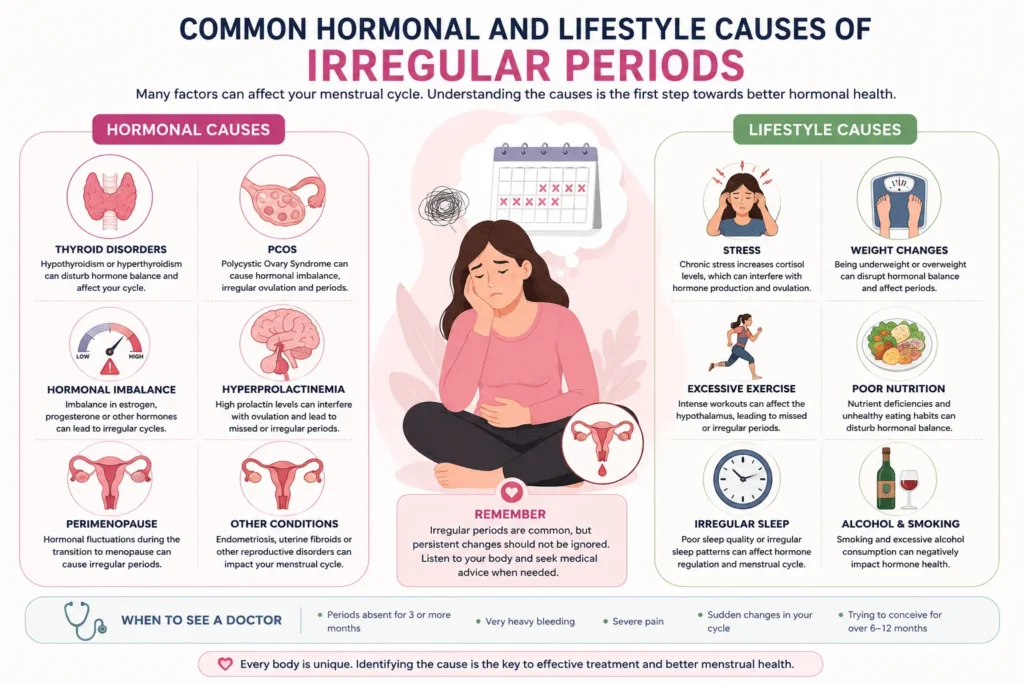
When Should You See a Doctor for Irregular Periods?
Arrange a medical appointment when:
-
- Periods suddenly become irregular after previously being predictable
-
- Cycles repeatedly occur less than approximately 21–24 days apart
-
- Cycles repeatedly occur more than approximately 35–38 days apart
-
- Periods stop for around three months and you are not pregnant or breastfeeding
-
- You repeatedly miss periods
-
- Bleeding lasts longer than seven to eight days
-
- Bleeding occurs between periods
-
- You bleed after sex
-
- Your periods are unusually heavy
-
- Period pain interferes with work, school, sleep or daily activities
-
- You are trying to become pregnant and your cycles are irregular
-
- You have irregular periods with acne, excess facial hair or scalp hair loss
-
- You have breast discharge, headaches or changes in vision
-
- You are under 40 and have hot flushes or other possible signs of ovarian insufficiency
-
- You experience any bleeding after menopause
The Office on Women’s Health recommends medical assessment when periods become irregular after previously normal cycles or regularly occur outside its 24-to-38-day reference range. It also advises speaking to a healthcare professional after 90 days without a period when pregnancy and breastfeeding do not apply.
When Is Irregular or Heavy Bleeding an Emergency?
Seek urgent medical attention when bleeding is very heavy or accompanied by symptoms suggesting significant blood loss.
Warning signs include:
-
- Soaking through one or more pads or tampons every hour
-
- Feeling faint or collapsing
-
- Severe dizziness
-
- Chest pain
-
- Shortness of breath
-
- Extreme weakness
-
- Severe abdominal or pelvic pain
-
- Heavy bleeding during a possible or confirmed pregnancy
ACOG identifies bleeding that soaks through pads or tampons every hour as abnormal. Dizziness, fainting, chest pain and breathing difficulty may indicate substantial blood loss or anaemia and should not be ignored.
Use local emergency services when symptoms are severe or rapidly worsening.
How Are Irregular Periods Diagnosed?
There is no single test for every case of irregular menstruation.
A healthcare professional may ask about:
-
- The date of your last period
-
- Usual cycle length
-
- Changes in bleeding
-
- Pregnancy possibility
-
- Contraceptive use
-
- Medicines and supplements
-
- Weight gain or loss
-
- Diet and exercise
-
- Stress and mental wellbeing
-
- Acne or excess hair growth
-
- Thyroid symptoms
-
- Breast discharge
-
- Pelvic pain
-
- Pregnancy plans
-
- Family history
Testing may include:
Pregnancy test
Pregnancy is generally ruled out first when a person of reproductive age has a missed or absent period.
Blood tests
Depending on symptoms, tests may include:
-
- Thyroid-stimulating hormone
-
- Prolactin
-
- Follicle-stimulating hormone
-
- Luteinising hormone
-
- Estradiol
-
- Testosterone or other androgen levels
-
- Full blood count when bleeding is heavy
-
- Blood glucose testing when PCOS or diabetes is suspected
Pelvic ultrasound
An ultrasound may be recommended to examine the ovaries, uterus and uterine lining.
Pelvic examination
A pelvic examination may be appropriate when bleeding, pain, discharge, infection or a structural condition is suspected.
Other tests
In selected cases, a doctor may recommend cervical screening, testing for sexually transmitted infections, an endometrial biopsy or further imaging.
The exact evaluation depends on age, symptoms, medical history and the pattern of bleeding. ASRM identifies pregnancy testing, menstrual history, hormone evaluation and, when appropriate, pelvic ultrasound as important parts of investigating absent menstruation.
How Are Irregular Periods Treated?
Treatment depends on the cause.
Irregular periods are not treated with one universal medicine because the correct approach for PCOS may be completely different from the approach for thyroid disease, pregnancy, low energy intake or perimenopause.
Possible treatment approaches may include:
-
- Treating a thyroid condition
-
- Managing PCOS
-
- Reviewing hormonal contraception
-
- Changing a medicine under medical supervision
-
- Improving calorie and nutrient intake
-
- Reducing excessive exercise
-
- Addressing an eating disorder
-
- Supporting healthy weight management
-
- Treating high prolactin levels
-
- Treating pelvic infection
-
- Managing fibroids, polyps or other uterine conditions
-
- Using hormonal treatment to regulate bleeding when medically appropriate
-
- Treating iron-deficiency anaemia caused by heavy bleeding
Treatment should address the underlying cause rather than simply forcing a monthly bleed without understanding why the cycle changed.
Can Lifestyle Changes Make Periods More Regular?
Lifestyle changes may help when irregular periods are related to stress, inadequate food intake, significant weight changes or excessive exercise.
Helpful steps may include:
-
- Eating enough calories for your activity level
-
- Avoiding extreme diets
-
- Getting sufficient protein, healthy fats and micronutrients
-
- Allowing recovery between intense workouts
-
- Maintaining a sustainable exercise routine
-
- Improving sleep
-
- Using healthy stress-management strategies
-
- Seeking help for disordered eating
-
- Taking medicines exactly as prescribed
Lifestyle changes cannot treat every cause. PCOS, thyroid disease, primary ovarian insufficiency, pregnancy complications and structural conditions still require appropriate healthcare.
Avoid unregulated products claiming to “bring periods in 24 hours” or “permanently balance hormones.” Hormones are not a misbehaving Wi-Fi router. Randomly switching them off and on is not a plan.
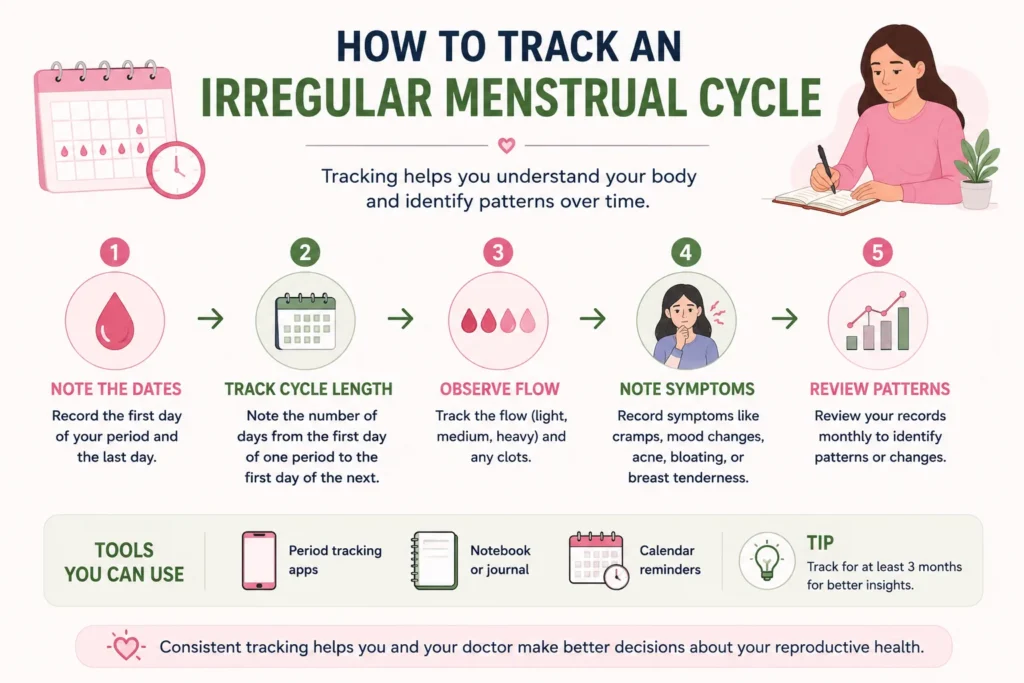
How to Track Your Menstrual Cycle
Tracking your periods for several months can help you understand your normal pattern and provide useful information during a medical appointment.
Record:
-
- The first day of each period
-
- The final day of bleeding
-
- Cycle length
-
- Light, moderate or heavy flow
-
- Number of pads, tampons or menstrual products used
-
- Blood clots
-
- Bleeding between periods
-
- Pain and cramps
-
- Mood changes
-
- Headaches
-
- Acne
-
- Medicines
-
- Pregnancy test results
-
- Major stress, illness or weight changes
A paper calendar, notes application or period-tracking application can be used. Tracking is useful, but it cannot diagnose the cause of irregular periods.
Frequently Asked Questions
How many days late is considered an irregular period?
There is no single number that applies to everyone. A cycle is generally considered potentially irregular when it repeatedly falls outside the expected adult range or varies considerably from month to month.
One period arriving several days late may happen because of stress, illness or normal variation. Repeatedly long cycles or a sudden change from your usual pattern should be discussed with a healthcare professional.
Can stress delay a period?
Yes. Significant or prolonged stress can interfere with the hormonal signals involved in ovulation and may delay or stop a period. Persistent irregularity should still be assessed rather than automatically attributed to stress.
Can you have irregular periods without PCOS?
Yes. PCOS is only one possible cause. Pregnancy, thyroid disease, weight changes, breastfeeding, hormonal contraception, high prolactin, excessive exercise, perimenopause and certain medicines can also cause irregular periods.
Can irregular periods affect fertility?
Irregular periods may indicate that ovulation is not happening regularly. This can make it harder to predict the fertile window and may reduce the number of opportunities for pregnancy.
However, irregular periods do not automatically mean infertility. The effect depends on the underlying cause.
Should I take a pregnancy test if my periods are irregular?
Take a pregnancy test when pregnancy is possible, even when cycles are usually unpredictable. When you cannot estimate your expected period, testing approximately four weeks after sex or 36 days after the start of the previous cycle may be reasonable.
Is it normal to miss a period occasionally?
An occasional late or missed period can happen. However, pregnancy should be ruled out when relevant.
Speak with a healthcare professional if periods repeatedly disappear, remain irregular or stop for approximately three months when you are not pregnant or breastfeeding.
Are irregular periods normal during puberty?
Some irregularity is common during the first few years after the first period. Medical assessment is appropriate for very long gaps, heavy bleeding, severe pain or irregularity that continues beyond the early years after menstruation begins.
Are irregular periods normal after age 40?
Cycles frequently become less predictable during perimenopause. However, new bleeding changes should still be discussed with a healthcare professional. Bleeding after menopause always requires medical evaluation.
Can thyroid problems cause irregular periods?
Yes. Both underactive and overactive thyroid conditions can affect menstrual timing, flow and fertility. A thyroid blood test may be recommended during the evaluation.
When should I worry about heavy bleeding?
Seek medical advice when periods last longer than seven to eight days, require changing a pad or tampon every one to two hours, contain large clots or cause tiredness, dizziness or weakness.
Seek urgent care when bleeding soaks through a pad or tampon every hour or is accompanied by fainting, chest pain, shortness of breath or severe pain.
Final Takeaway
Irregular periods can happen for many reasons. Pregnancy, hormonal contraception, PCOS, thyroid disease, stress, significant weight changes, intensive exercise, breastfeeding and perimenopause are among the most common possibilities.
One slightly late period is usually less concerning than a pattern of repeated changes.
Arrange a medical assessment when your periods suddenly become irregular, repeatedly occur unusually close together or far apart, stop for approximately three months, become very heavy or occur between periods or after sex.
Seek urgent care for very heavy bleeding, fainting, severe dizziness, chest pain, breathing difficulty or bleeding with severe pain during a possible pregnancy.
Tracking your cycle can help identify changes, but a pregnancy test, medical history, examination and appropriate laboratory or imaging tests may be needed to find the cause.
Medical Disclaimer
This article is intended for general educational purposes only. It cannot diagnose the cause of irregular periods or replace individual medical advice. Speak with a qualified healthcare professional about persistent menstrual changes, pregnancy concerns, severe pain or abnormal bleeding.
Research Sources
-
- American College of Obstetricians and Gynecologists
-
- U.S. Office on Women’s Health
-
- National Institute of Diabetes and Digestive and Kidney Diseases
-
- National Library of Medicine and MedlinePlus
The central clinical guidance used for this article includes ACOG information on abnormal uterine bleeding, ASRM guidance on evaluating amenorrhea, Office on Women’s Health menstrual guidance and NIDDK information on thyroid disorders.